Announcing Rework Tracking — Improving Software Recall Transparency
We are excited to announce tracking of Software Recall "Rework" — when manufacturers need multiple attempts to fix a software defect. Over the past four years, 343 reworked recalls have affected over 24 million vehicles, revealing critical insights into software quality across the industry.
Announcing Rework Tracking: Improving Software Transparency at AutoSoftToday
We are excited to announce a powerful new feature on our platform: the tracking of Software Recall “Rework.” As vehicles become increasingly defined by their code, understanding the lifecycle of a software fix is critical for safety and manufacturer accountability.
What is Software Rework?
At AutoSoftToday, we define Reworked Recalls as software defects that required multiple attempts to fix properly. This occurs when an initial recall’s remedy proves ineffective, incomplete, or—in some cases—introduces entirely new issues. By tracking these through parent/child relationships and generation numbers, we can help identify quality patterns across the industry.
How We Count Rework Generations
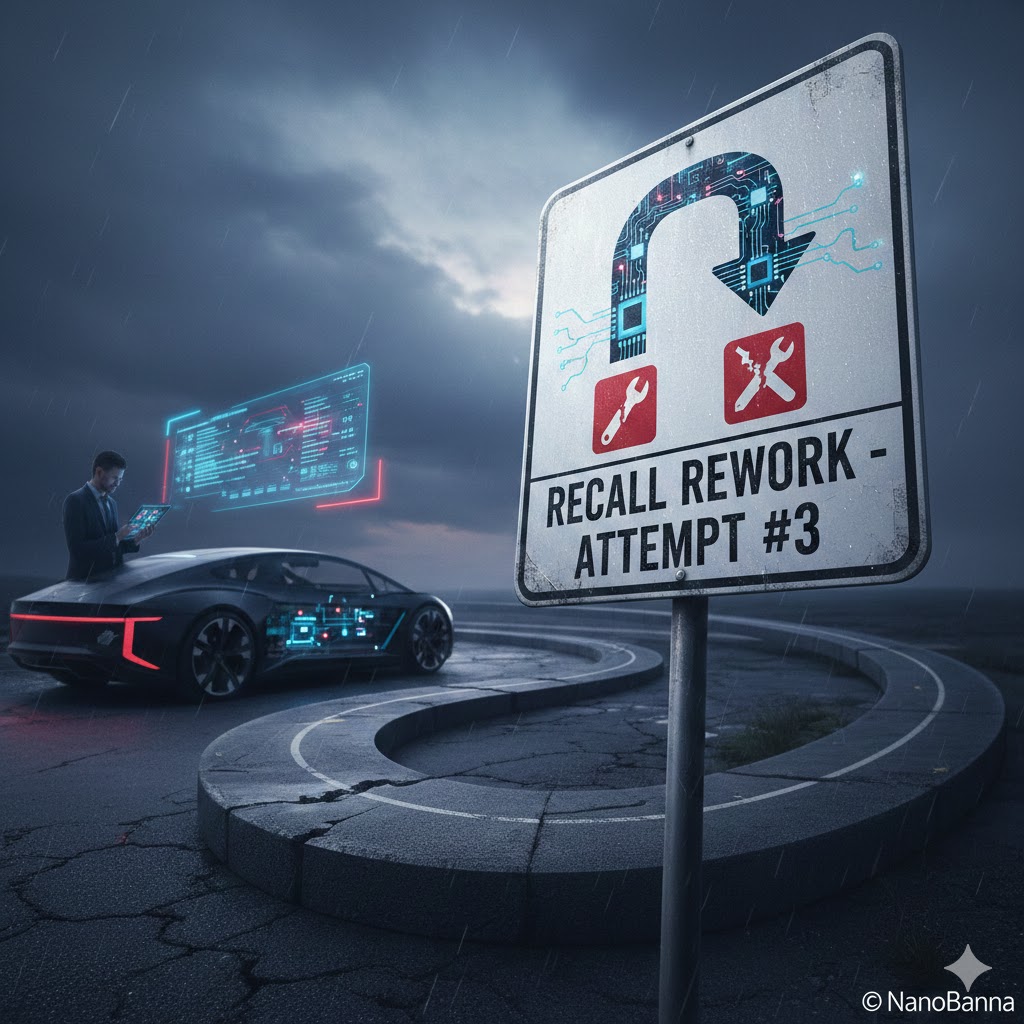
Think of a software recall like a chain: the original defect is “Generation 1.” Each time the manufacturer has to issue a follow-up recall to fix the previous attempted fix, we move up one generation. A “Generation 3” recall means the manufacturer tried twice and failed before getting it right the third time. The generation number reflects the entire chain of attempts—not just direct parents. For example, if Recall A addressed Issue X, Recall B attempted to fix A but created Problem Y, and Recall C finally fixed both, then Recall C is Generation 3. This metric reveals which manufacturers struggle most with “first-time-right” software quality and how deep their rework chains go.
The Impact of Rework
Reworked recalls are a significant hurdle for both manufacturers and consumers. They often signal a lack of initial “software-readiness” or complex system dependencies that are difficult to patch on the first try. Over the past four years, the data is striking:
- Total Reworked Recalls: 343
- Total Vehicles Affected: 24,503,436
The Most Reworked Software Campaigns
The following table highlights the campaigns with the highest Generation Depth, representing the recalls that have undergone the most iterations to reach a final fix.
| Title | Manufacturer | Rework Gen |
|---|---|---|
| Cracked Fuel Injector May Leak and Cause a Fire | Ford Motor Company | Gen 5 |
| High Voltage Battery May Catch Fire | General Motors, LLC | Gen 5 |
| High Voltage Battery May Fail and Cause Fire | Chrysler (FCA US, LLC) | Gen 4 |
| Rearview Camera Image May Not Display | Ford Motor Company | Gen 4 |
| Rearview Image May Not Display/FMVSS 111 | Chrysler (FCA US, LLC) | Gen 4 |
Largest Reworked Recalls (Gen 2+)
These are the highest-impact reworks in terms of scale, focusing on campaigns with at least two generations of fixes and the largest number of affected vehicles.
| Title | Manufacturer | Vehicles Affected | Rework Gen |
|---|---|---|---|
| Cracked Fuel Injector May Leak and Cause a Fire | Ford Motor Company | 694,271 | Gen 5 |
| Pedestrian Warning Sound May Be Obscured/FMVSS 141 | Tesla, Inc. | 578,607 | Gen 2 |
| Cracked Fuel Injector May Leak and Cause a Fire | Ford Motor Company | 521,746 | Gen 2 |
| Rearview Camera Image May Not Display | Ford Motor Company | 382,759 | Gen 2 |
| High Voltage Battery May Fail and Cause Fire | Chrysler (FCA US, LLC) | 320,068 | Gen 4 |
Tags
- Automotive
- Website Update
- Software Recalls
- Rework
- Quality
- Software Quality
- Vehicle Safety
- Recall Tracking
- Manufacturing